

EMBank Chairman Ekmel Çilingir Examines Euro Stablecoins and EU Monetary Sovereignty
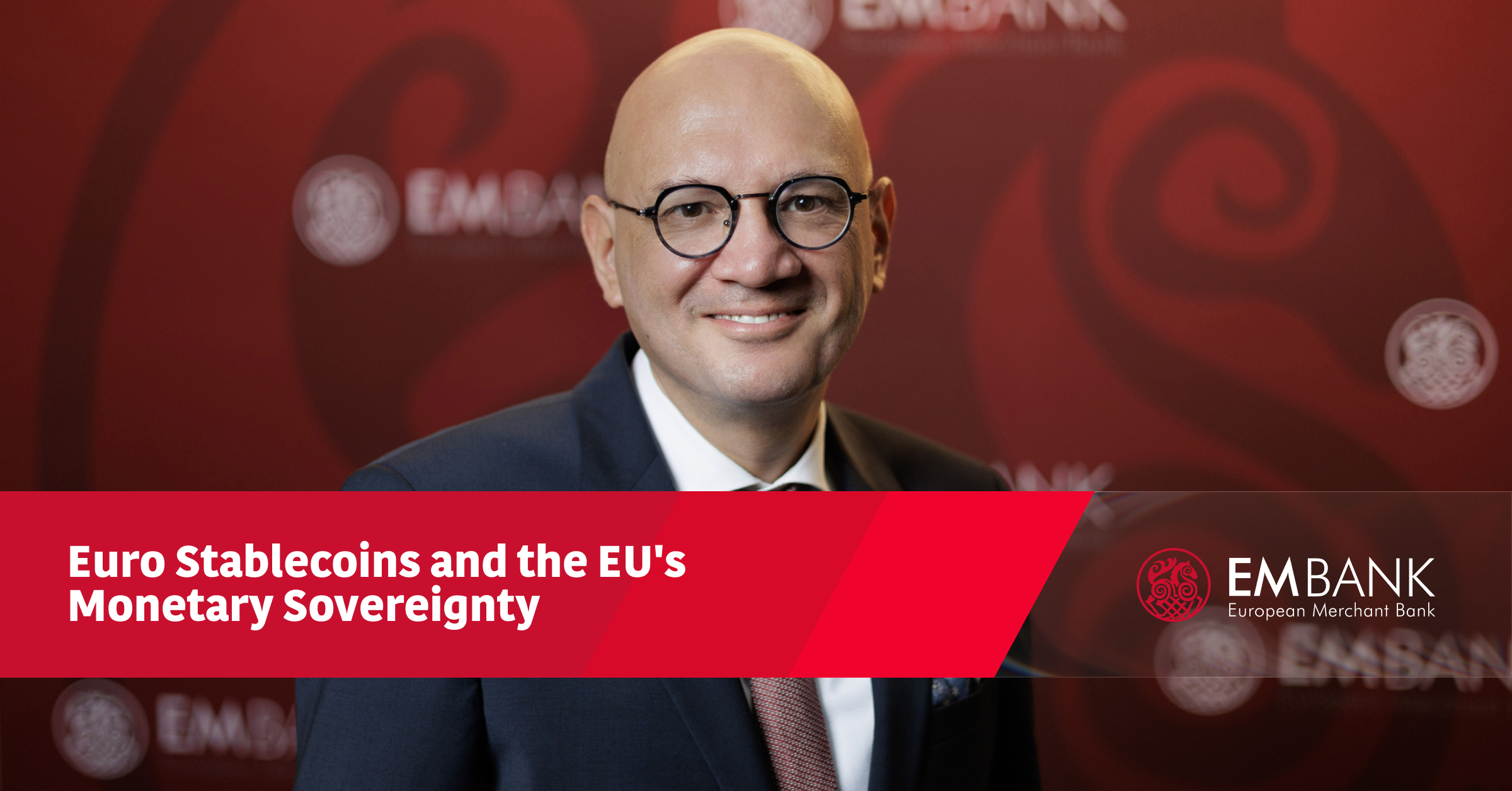
EMBank Chairman Ekmel Çilingir Examines Euro Stablecoins and EU Monetary Sovereignty
EMBank Chairman Ekmel Çilingir Examines Euro Stablecoins and EU Monetary Sovereignty
A stablecoin can be fully compliant and still fail commercially.”
VILNIUS, LITHUANIA, July 28, 2026 /EINPresswire.com/ -- Ekmel Çilingir, Chairman of the Supervisory Board at European Merchant Bank (EMBank), has published a new article examining the role euro-denominated stablecoins could play in Europe’s digital financial infrastructure. Titled “Euro Stablecoins and the EU’s Monetary Sovereignty”, the article considers the growing dominance of US dollar stablecoins, the limited scale of euro alternatives and the policy choices facing European institutions. Çilingir argues that the issue extends beyond crypto markets and concerns the future operational relevance of the euro in programmable financial systems.— Ekmel Cilingir, Chairman of the Supervisory Board at EMBank
Stablecoins were initially developed to reduce volatility in crypto markets by linking digital tokens to fiat currencies. They have since expanded into cross-border payments, digital commerce, treasury operations, decentralised finance and tokenised asset settlement.
Çilingir notes that this market remains overwhelmingly dollar-based. According to the article, the global stablecoin market had reached approximately USD 300 billion by mid 2026, with more than 99% denominated in US dollars. Euro stablecoins, by comparison, represented well under EUR 1 billion.
“The question is therefore strategic: as the infrastructure of the digital economy is built, will the euro become a native currency within it, or will Europe accept a future in which its digital transactions increasingly depend on dollar-denominated rails?” Çilingir writes.
The article argues that stablecoin adoption may strengthen the currency already embedded in wallets, exchanges, payment applications, smart contracts and tokenised markets. As businesses and developers build around the most liquid currency, that position can become increasingly difficult to displace.
Çilingir also examines the potential commercial uses of euro stablecoins. These include faster cross-border settlement, continuous payment availability, automated supplier payments, programmable treasury processes and euro-denominated settlement for tokenised bonds, funds and other financial instruments.
“Europe does not merely need another digital representation of the euro,” he writes. “It needs a usable, liquid, interoperable euro layer that businesses can integrate into real commercial activity.”
The article also reviews the EU’s Markets in Crypto Assets Regulation, known as MiCA. Çilingir describes MiCA as an important framework for reserve management, redemption, disclosure, and supervision, while arguing that legal certainty alone will not lead to widespread adoption.
“A stablecoin can be fully compliant and still fail commercially,” he states, pointing to the need for liquidity, distribution, exchange access, banking relationships and practical use cases.
On the relationship between euro stablecoins and the proposed digital euro, Çilingir rejects the view that the two must compete. A digital euro would represent central bank money, while regulated stablecoins could be used more flexibly across commercial platforms, payment applications and tokenised markets.
“The future of money is likely to be multi-layered,” he writes, suggesting that central bank money, commercial bank deposits, tokenised deposits and stablecoins may coexist.
The article concludes that Europe’s position will depend on adoption, interoperability and international use. “Regulation is necessary, but it is not a strategy,” Çilingir writes. “A strategy creates adoption, incentives, infrastructure and global relevance. You can read the full article here.
About Ekmel Çilingir
Ekmel Çilingir is the Chairman of the Supervisory Board at EMBank and an internationally recognised banking and fintech executive with extensive experience in payments, digital banking, financial innovation, and cross-border financial services.
About EMBank
EMBank, headquartered in Vilnius, Lithuania, is a digital-first bank focused on delivering innovative banking solutions to fintechs and Lithuanian businesses.
Dilek Işık
European Merchant Bank (EMBank)
email us here
Legal Disclaimer:
EIN Presswire provides this news content "as is" without warranty of any kind. We do not accept any responsibility or liability for the accuracy, content, images, videos, licenses, completeness, legality, or reliability of the information contained in this article. If you have any complaints or copyright issues related to this article, kindly contact the author above.
